
Marine Invertebrates
Camel Shrimp
Rhynchocinetes durbanensisRhynchocinetidaeCamel shrimp
Price: $28.20 USD
Add from My tanks →1 photos
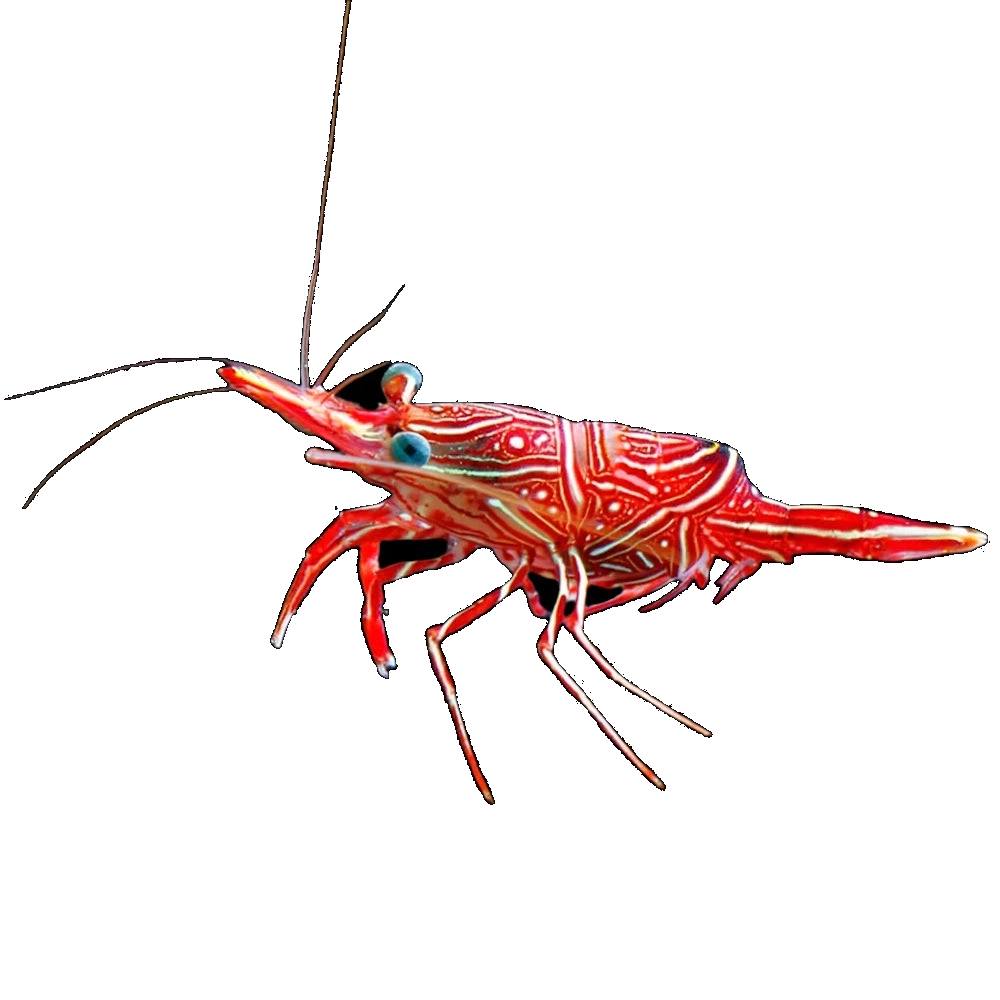
The Camel Shrimp, also known as the Hinge-beak, Dancing, or Candy Shrimp, is distinguished by a moveable rostrum usually angled upwards and a variable red and white striped pattern; males have larger claws. It congregates with its own kind in rock crevices and coral rubble, needs hiding places when molting, may nip at colonial anemones, disc anemones, and soft leather corals but leaves bubble coral and stinging anemones alone; it accepts brine shrimp, frozen or freeze-dried plankton, and flaked food.
Quick facts
Identity
- Also known as
- Hinge-beak shrimp; Dancing shrimp; Candy shrimp; Hingebeak prawn; Humpback shrimp
- Synonyms
- Rhynchocinetes brucei (similar, often confused); Rhynchocinetes uritai (frequently confused)
- Environment
- Saltwater
- Native to
- Indo-Pacific
- Habitat
- Shallow rocky reef inshore areas, caves, crevices and overhangs from about 16 to 115 ft deep, often forming groups of dozens of individuals
- Sourcing
- Wild-caught
- Conservation
- Not Evaluated
Care
- Care level
- Easy
- Temperament
- Peaceful
- Adult size
- 1 – 2 in (2.5 – 5.1 cm)
- Lifespan
- 1 – 2 yrs
- Min tank
- 30 gal (114 L)
- Growth rate
- Slow
- Placement
- Bottom
Water
- Temperature
- 72 – 79 °F (22 – 26 °C)
- pH
- 8.0 – 8.4
- dKH
- 8 – 12 dKH
- Salinity
- 1.023 – 1.025 SG
- Flow
- Moderate
Behavior & compatibility
- Social
- Group · groups of 3+
- Aggression to own kind
- Low
- Active
- Night
- Reef safe
- With caution
- Invert safe
- With caution
- Shrimp safe
- Yes
- Clean-up role
- Detritus, Leftover food, Algae
- Population boom risk
- Low
Feeding & breeding
- Diet
- Omnivore
- Foods
- Frozen, Freeze-dried, Pellets, Flakes, Algae, Vegetables
- Breeding type
- Broadcast spawner
- Breeding difficulty
- Difficult
- Sexing
- Dominant males develop a noticeably larger first pair of chelipeds (claws) than females; females are otherwise similar in size and pattern
- Target feeding
- Beneficial
Something wrong or missing? Submit a correction
Care guide
Overview
Camel Shrimp is a small red-and-white banded crustacean named for its humped, arched back and upward-hooked rostrum. It hides among rockwork by day, emerging after dark to scavenge, and does best kept in small groups within a mature fish-only-with-live-rock system stocked with plenty of crevices. Handle molts and acclimation carefully, as it is copper-sensitive and slow to reproduce in captivity.
Care
A hardy scavenger for a fish-only-with-live-rock setup, this shrimp needs abundant rockwork riddled with caves and overhangs to feel secure, since it spends daylight hours tucked away and only becomes active after dark. Keeping several individuals together in a single system encourages bolder, more visible behavior than housing one alone. Stable salinity and calcium, magnesium and iodine levels support smooth molting, and copper-based medications should never be used in a tank holding this species.
Feeding
An opportunistic omnivore, it scavenges detritus, leftover fish food and algae film from the rocks but also readily accepts frozen mysis and brine shrimp, sinking pellets, flakes and freeze-dried plankton. Offering meaty foods in the evening, just before lights go out, helps satisfy its appetite and reduces the odds of it picking at coral polyps overnight. It is not a reliable algae or pest-anemone eater despite occasional scavenging on both.
Tank mates
Peaceful toward fish and most other invertebrates, but not considered reef safe, since it will nip at zoanthids, mushroom and disc anemones, and soft leather corals while generally leaving bubble coral and stinging anemones undisturbed. Best paired with peaceful, non-predatory tank mates, as many fish that hunt crustaceans will readily eat a shrimp this size. Small groups of its own kind get along well when enough crevices are available for each to claim a hiding spot.
Breeding
Females regularly carry several hundred to well over a thousand eggs beneath the abdomen, which hatch into free-swimming planktonic larvae after roughly nine to eighteen days depending on temperature. Rearing the larvae through their many developmental stages demands specialized live feeds and precise water conditions, so successful home-aquarium breeding is rare. Most specimens in the trade are still wild-caught or collected as larvae rather than captive-bred.
Health
Molting is the most vulnerable period, and depleted iodine or unstable water parameters can lead to incomplete molts or death. Sudden swings in salinity are poorly tolerated, so slow drip acclimation is recommended when introducing new specimens. Copper exposure, even at levels safe for fish, is highly toxic to this species.
Sources
Something wrong or missing? Submit a correction
In the community
Popular tanks using Camel Shrimp
No public tanks are showcasing Camel Shrimp yet.