
Aquatic Plant
Blood Vomit (Centrolepis Drummondiana)
Centrolepis drummondianaCentrolepidaceaeForeground plants
Price: $45.99 USD
Add from My tanks →1 photos
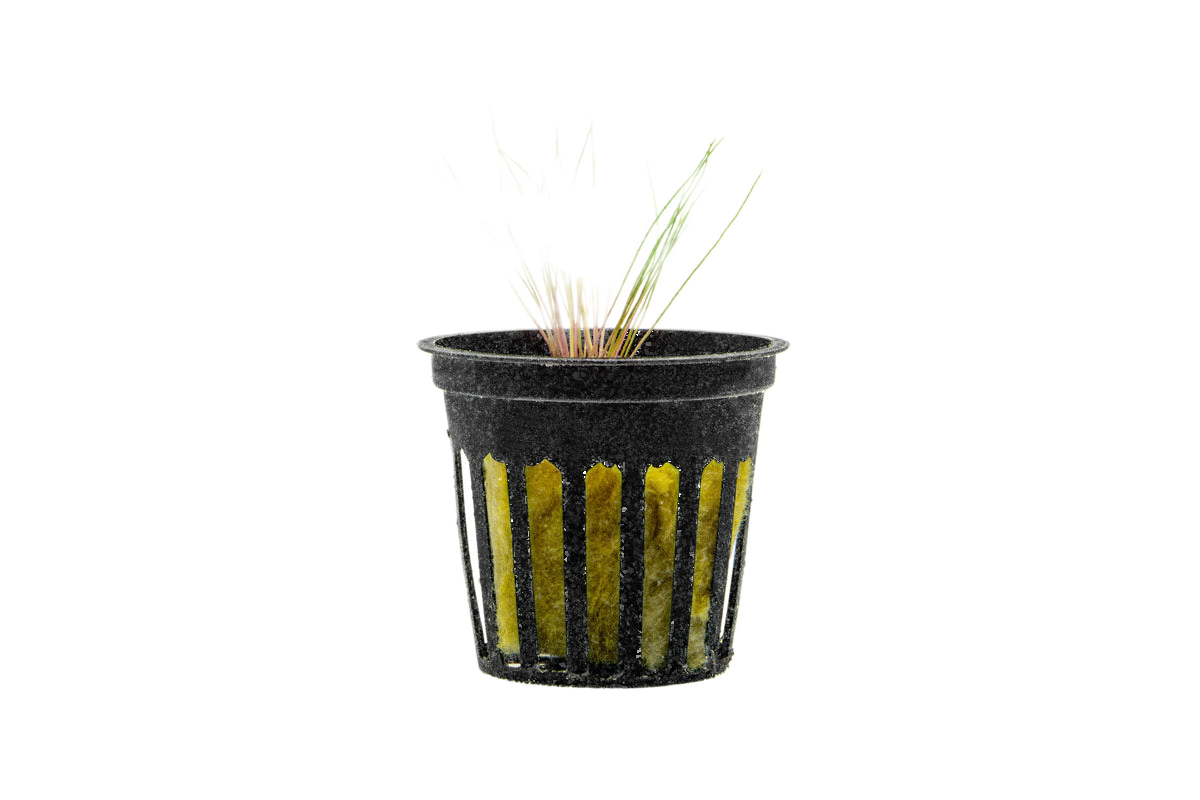
Centrolepis drummondiana 'Blood Vomit' is a rare Australian foreground plant with fine, grassy blades and reddish tones at the base under strong light. It stays compact and low for detailed layouts but is difficult: it needs bright light, consistent CO2 and stable conditions, and grows slowly.
Quick facts
Identity
- Also known as
- Eriocaulon sp. 'Blood Vomit'; Trithuria sp. 'Blood Vomit'
- Synonyms
- Eriocaulon sp. 'Blood Vomit'; Trithuria sp. 'Blood Vomit'
- Environment
- Freshwater
- Native to
- Australia
- Habitat
- Seasonally wet sand flats and winter-wet depressions in southern Australia that dry out in summer; grown as a permanently submersed aquatic only in the aquarium trade
- Sourcing
- Both
- Conservation
- Not Evaluated
Care
- Care level
- Difficult
- Growth form
- Rosette
- Max height
- 1 – 2 in (2.5 – 5.1 cm)
- Spread
- 2 in (5.1 cm)
- Growth rate
- Slow
- Placement
- Foreground
Water
- Temperature
- 68 – 82 °F (20 – 28 °C)
- pH
- 5.5 – 6.5
- GH
- 0 – 5 dGH
- dKH
- 0 – 2 dKH
- PAR
- 100 – 200 PAR
- Flow
- Low-Moderate
- Light
- High
- CO₂
- Required
Planting
- Substrate
- Nutrient-rich required
- Feeds from
- Roots
- Fertilizer needs
- High
- Colors
- Green, Red
Feeding & breeding
- Propagation
- Rhizome division, Splitting
Something wrong or missing? Submit a correction
Care guide
Overview
Fine, grassy blades emerge from a compact rosette that deepens to a reddish base when light is strong, forming a low, dense foreground carpet over time. It demands high light, injected CO2, and nutrient-rich substrate to hold its color and shape. Growth is slow and decline gradual, so consistency matters more than perfection.
Care
Blood Vomit is a demanding foreground species suited to mature, high-tech planted tanks rather than beginner setups. It needs strong light, injected CO2 held at the high end of the usual range, and soft, low-KH water over a nutrient-rich aquasoil to hold its compact rosette shape and deep red base colour. Growth is slow and steady when conditions are right, but the plant tends to decline gradually rather than crash when parameters slip, which can mask problems until real damage is done. Keep it free of shade from taller neighbours and give the substrate real depth, since the root system often grows longer than the leaves.
Planting & trimming
Plant directly into a deep layer of nutrient-rich aquasoil, since the root system commonly grows longer than the leaves and needs real substrate depth to establish. Keep the crown at the surface of the substrate rather than burying the leaf base, and position it where it will not be shaded by faster-growing neighbours. Direct flow and CO2 toward the substrate zone, since this low-growing species benefits little from surface-level circulation.
Fertilizing
Root feeding matters more than water column dosing for this species, so plant it into a fresh, nutrient-rich aquasoil or supplement with root tabs containing ammonium. A complete liquid fertilizer helps sharpen the red base colouration once the plant is established, though it is not a substitute for a good substrate. Pale or stalled growth usually points to a depleted or inert substrate rather than a simple nutrient deficiency in the water column.
Propagation
The plant does not send out runners, so new plants come only from dividing existing rosettes. Once a cluster has grown large enough, lift it and gently tease or cut it apart into separate crowns, each with its own roots and leaves, then replant the sections individually.
Problems
Because decline is slow rather than sudden, poor CO2 control or weak light can go unnoticed for weeks before the plant visibly weakens, so consistency is more important than chasing perfect numbers. Slow growth combined with any drop in water quality leaves the leaves prone to algae fouling, so trims of old or algae-covered leaves help keep the rosette clean. Sudden, rapid death is usually a sign of a water parameter problem or weak starting stock rather than a normal adjustment period.
Sources
More Foreground plants
Something wrong or missing? Submit a correction
In the community
Popular tanks using Blood Vomit (Centrolepis Drummondiana)
No public tanks are showcasing Blood Vomit (Centrolepis Drummondiana) yet.