
Marine Invertebrates
Berghia Nudibranchs
Berghia stephanieaeAeolidiidaeNudibranchs
Price: $35.25 USD
Add from My tanks →1 photos
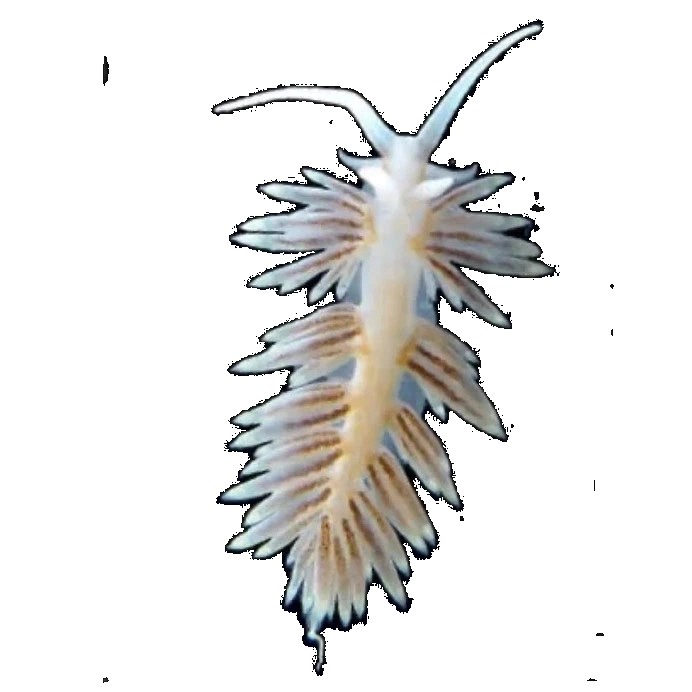
Berghia Nudibranchs (Berghia stephanieae) are reef-safe sea slugs that feed exclusively on nuisance Aiptasia anemones, offering a natural chemical-free pest control that leaves corals, clams, and fish unharmed. They require an Aiptasia population to survive, are moderate-care, and should not be kept with wrasses, peppermint shrimp, dottybacks, or butterflyfish that may prey on them.
Quick facts
Identity
- Also known as
- Aiptasia-eating nudibranch
- Synonyms
- Aeolidiella stephanieae
- Environment
- Saltwater
- Native to
- Western Atlantic, Caribbean, Florida
- Habitat
- Shallow reef and lagoon waters, 1-2 m depth, among rockwork where Aiptasia anemones are present
- Sourcing
- Aquacultured
- Conservation
- Not Evaluated
Care
- Care level
- Moderate
- Temperament
- Peaceful
- Adult size
- 0.5 – 1 in (1.3 – 2.5 cm)
- Lifespan
- 1 – 2 yrs
- Min tank
- 10 gal (38 L)
- Growth rate
- Slow
- Placement
- Rock & glass
Water
- Temperature
- 72 – 80 °F (22 – 27 °C)
- pH
- 8.1 – 8.4
- dKH
- 8 – 14 dKH
- Salinity
- 1.023 – 1.026 SG
- Flow
- Low
Behavior & compatibility
- Social
- Solitary
- Aggression to own kind
- Low
- Active
- Night
- Reef safe
- Yes
- Invert safe
- Yes
- Shrimp safe
- Yes
- Clean-up role
- Pest control
- Population boom risk
- Low
Feeding & breeding
- Diet
- Carnivore
- Foods
- Live
- Breeding type
- Broadcast spawner
- Breeding difficulty
- Moderate
- Sexing
- Simultaneous hermaphrodite; no external sexual dimorphism, any two adults can mate and lay eggs
- Target feeding
- Not needed
Something wrong or missing? Submit a correction
Care guide
Overview
Hunts by night across live rock, tracking Aiptasia anemones by scent and retreating into crevices by day. This small cream-and-orange sea slug survives only where an active glassy anemone infestation exists, making pre-purchase confirmation essential. Populations decline naturally once prey is exhausted, requiring rehoming rather than target feeding.
Care
Berghia stephanieae is a small nocturnal sea slug kept exclusively to eradicate Aiptasia glass anemones in reef aquariums. It needs a mature, fully cycled, stable system with zero measurable ammonia, since it is sensitive to swings in water chemistry and to residues such as metal ions from salt spray on lighting equipment. Because it hides among rockwork by day and hunts at night, direct observation is limited to occasional glimpses unless a red light is used after dark. Once its food source is exhausted the population declines on its own, so ongoing care mainly consists of maintaining stable reef parameters rather than active feeding.
Feeding
Diet is restricted entirely to anemones of the genus Aiptasia, and adults can starve within days if none are available, so a tank must have an active infestation before purchase. They locate prey from a considerable distance across the rockwork and will migrate to it unassisted once released. If Aiptasia is eliminated before breeding produces a self-sustaining colony, remaining individuals should be rehomed to another aquarium with a food source rather than left to starve.
Tank mates
Best kept in reef systems without dedicated Aiptasia predators or omnivorous fish that may pick them off, such as wrasses, dottybacks, butterflyfish, or peppermint shrimp. They are otherwise harmless to corals, clams, fish, and other invertebrates, and do not sting or compete for space. Strong pump intakes and overflows are a hazard given their small size and slow movement, so these should be screened.
Breeding
Given a steady supply of Aiptasia, Berghia stephanieae will reproduce readily and can form a self-sustaining breeding colony within a reef tank. As simultaneous hermaphrodites, any two mature individuals can pair and lay coiled egg ribbons on the rockwork. Larvae pass through a planktonic stage before settling and metamorphosing over roughly two months, and captive culture of this species for the aquarium trade is well established.
Health
The species is delicate during shipping and acclimation, and exposure to bright aquarium lighting, infrared, or UV during transport can be lethal, so acclimation should be done in darkness or dim light. Pipetting or rough handling can strip the cerata, which the animal uses for both digestion and chemical defense against predators, weakening or killing it. Sudden salinity or temperature swings in the small volumes used for shipping and acclimation are a common cause of losses.
Sources
Something wrong or missing? Submit a correction
In the community
Popular tanks using Berghia Nudibranchs
No public tanks are showcasing Berghia Nudibranchs yet.