
Marine Invertebrates
Arrow Crab
Stenorhynchus seticornisInachidaeArrow crabs
Price: $49.35 USD
Add from My tanks →1 photos
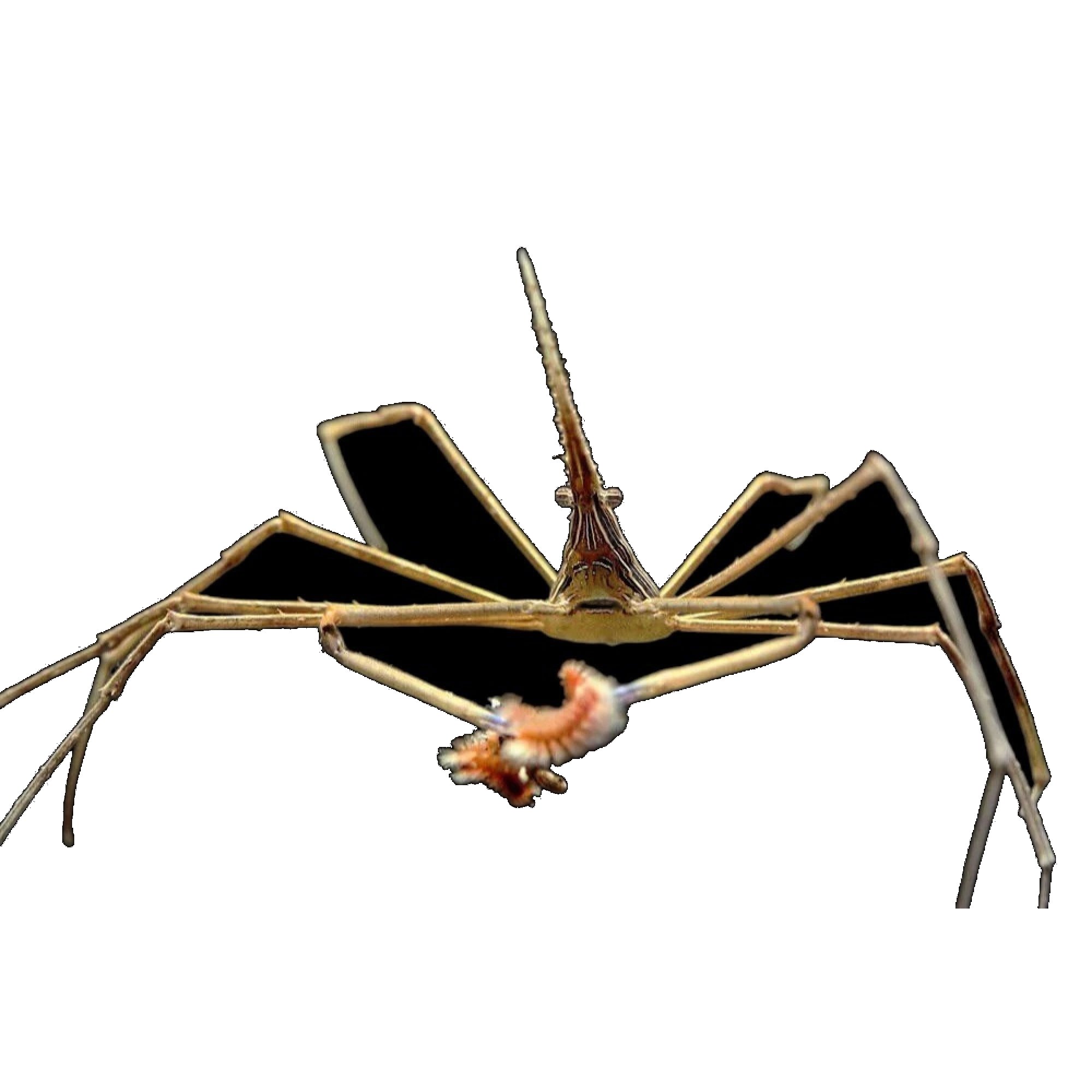
The Arrow Crab (Stenorhynchus seticornis) is a unique, eye-catching marine invertebrate known for its extremely long, thin legs and pointed body shape; native to Western Atlantic and Caribbean reefs, it hides among live rock, caves, and coral structures and comes out mainly at night to feed as an opportunistic omnivore and scavenger. It can be semi-aggressive toward small or slow-moving fish and invertebrates and is not fully reef safe in all setups, so it suits experienced reef keepers; provide plenty of live rock and hiding spaces, feed if natural food sources are limited, and keep with compatible non-aggressive tankmates.
Quick facts
Handling caution: Sharp, pointed claws can pinch; not venomous
Identity
- Also known as
- Yellowline Arrow Crab; Spider Crab
- Synonyms
- Stenorhynchus sagittarius
- Environment
- Saltwater
- Native to
- Western Atlantic, Caribbean Sea, Gulf of Mexico, Bermuda, Brazil
- Habitat
- Shallow coral reefs, rocky crevices, tide pools, and sand flats at depths of about 3-30 m, often sheltering near sea urchins or anemone tentacles.
- Sourcing
- Wild-caught
- Conservation
- Not Evaluated
Care
- Care level
- Easy
- Temperament
- Semi-Aggressive
- Adult size
- 2 – 6 in (5.1 – 15 cm)
- Lifespan
- 2 – 5 yrs
- Min tank
- 30 gal (114 L)
- Growth rate
- Slow
- Placement
- Rock & glass
Water
- Temperature
- 72 – 78 °F (22 – 26 °C)
- pH
- 8.1 – 8.4
- dKH
- 8 – 12 dKH
- Salinity
- 1.023 – 1.025 SG
- Flow
- Moderate
Behavior & compatibility
- Social
- Solitary
- Aggression to own kind
- High
- Active
- Night
- Reef safe
- With caution
- Invert safe
- With caution
- Shrimp safe
- With caution
- Clean-up role
- Pest control, Detritus, Leftover food
- Population boom risk
- Low
Feeding & breeding
- Diet
- Carnivore
- Foods
- Frozen, Live, Freeze-dried, Pellets, Flakes
- Breeding type
- Direct development
- Breeding difficulty
- Not bred in captivity
- Sexing
- Females are noticeably smaller than males and may carry visible egg masses under the abdomen when berried; otherwise sexes look similar.
- Target feeding
- Beneficial
Something wrong or missing? Submit a correction
Care guide
Overview
Arrow crabs are long-legged spider crabs whose slender, triangular body and stilt-like walking legs give them their name and a cream, brown, and yellow-striped coloring. It stays wedged in rock crevices by day, emerging at night to scavenge, and molts periodically, requiring stable water chemistry and abundant hiding spots. Keep singly, as males fight, and feed regularly to curb any pecking at small tankmates or coral polyps.
Care
A long-legged spider crab that spends daylight hours wedged into rock crevices and becomes active after lights out. It needs mature live rock riddled with caves and overhangs, both for daytime shelter and as a refuge during molting, when it is soft and defenseless. Stable water chemistry matters more than exact numbers; sudden swings in salinity or pH stress this species more than slow drift.
Feeding
Naturally an opportunistic scavenger and predator, picking apart bristleworms, feather duster worms, and small invertebrates it can catch. In captivity it readily takes meaty frozen foods like mysis, shrimp, and clam, along with sinking pellets, and will scavenge uneaten fish food from the substrate. Feed several times a week; a hungry arrow crab is far more likely to turn on tankmates or peck at coral polyps.
Tank mates
Best paired with fish too large or fast to be caught, since slow-moving or small fish and shrimp can become prey. Two males housed together will fight, often fatally, so keep only one per tank unless the aquarium is very large with abundant hiding spots. It is generally left alone by larger reef fish and can coexist with most corals if well fed, though a starved individual may pick at polyps.
Breeding
Females carry fertilized eggs attached to the underside of the abdomen until they hatch into free-swimming larvae after roughly two weeks. The planktonic larvae require open-ocean rearing conditions that are impractical to replicate in a home aquarium, so captive breeding is essentially unheard of. Specimens in the trade are collected from the wild rather than tank-raised.
Health
Molting is the main period of vulnerability, since the crab is briefly soft-shelled and an easy target for tankmates; leaving the shed exoskeleton in the tank lets it reclaim minerals by eating it. Copper-based medications are lethal and must never be dosed in a system housing this crab. Poor water quality or high nitrate and phosphate levels can interfere with successful molting.
Sources
Something wrong or missing? Submit a correction
In the community
Popular tanks using Arrow Crab
No public tanks are showcasing Arrow Crab yet.