
Aquatic Plant
Aponogeton Henkelianus Bulb
Aponogeton henkelianusAponogetonaceaeLace plants
Price: $9.99 USD
Add from My tanks →1 photos
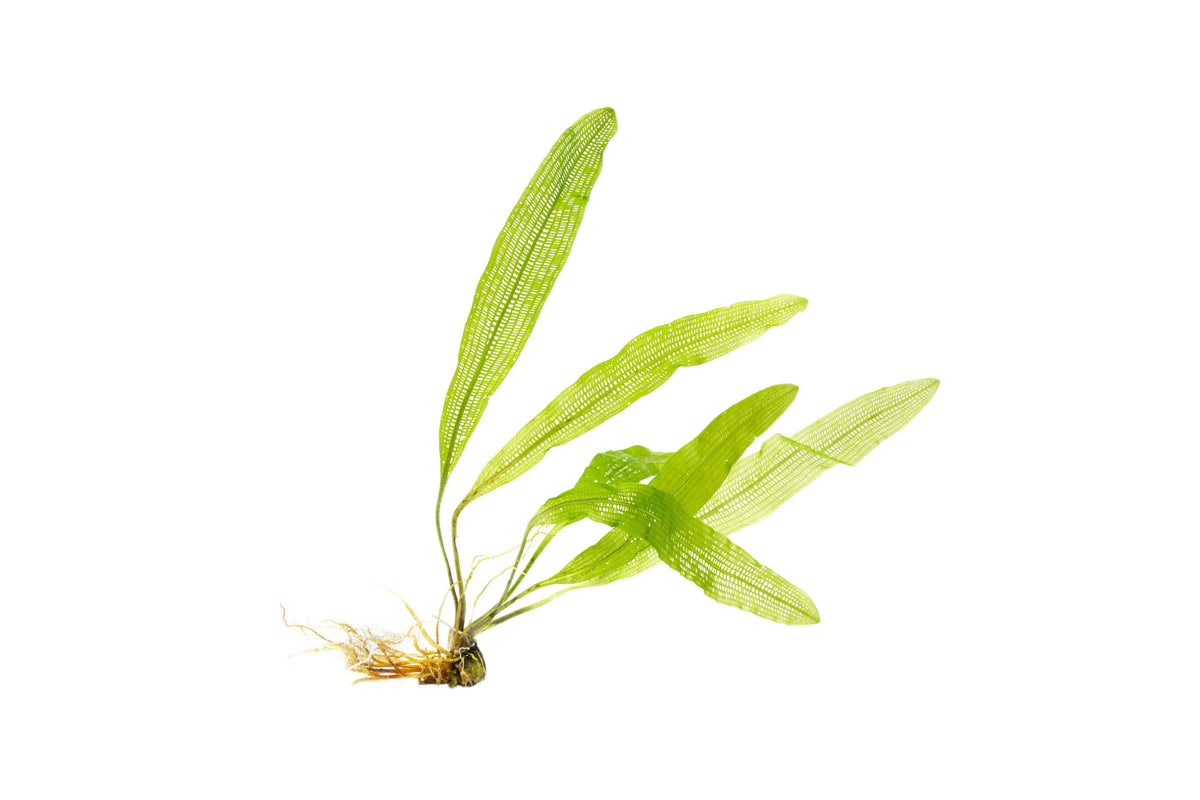
Aponogeton henkelianus is a close relative of Aponogeton madagascariensis from Madagascar's fast-flowing waters, featuring lacy, broad leaves and swallow-tailed white or yellowish self-pollinating flowers. This difficult-care bulb plant prefers substrate low in organic matter with soluble iron, and works best in the background or midground of larger aquariums.
Quick facts
Identity
- Also known as
- Henkel's lace plant; Madagascar lace plant; Lace leaf; Ruffled Aponogeton
- Synonyms
- Aponogeton madagascariensis var. henkelianus; Aponogeton fenestralis
- Environment
- Freshwater
- Native to
- Madagascar
- Habitat
- Cool, shaded, fast-flowing streams and rivers in Madagascar, growing fully submersed among rocks and gravel
- Sourcing
- Aquacultured
- Conservation
- Not Evaluated
Care
- Care level
- Difficult
- Growth form
- Bulb
- Max height
- 6 – 20 in (15 – 51 cm)
- Spread
- 16 in (41 cm)
- Growth rate
- Moderate
- Placement
- Midground, Background
Water
- Temperature
- 64 – 75 °F (18 – 24 °C)
- pH
- 5.5 – 7.0
- GH
- 2 – 10 dGH
- dKH
- 0 – 6 dKH
- Flow
- Moderate
- Light
- Medium
- CO₂
- Beneficial
Planting
- Substrate
- Nutrient-rich preferred
- Feeds from
- Both
- Fertilizer needs
- High
- Colors
- Green
Feeding & breeding
- Propagation
- Rhizome division, Seeds
Something wrong or missing? Submit a correction
Care guide
Overview
Streams and rivers of Madagascar are home to the wild ancestor of this lattice-leaved bulb, prized for its fenestrated, lace-like foliage. It demands cooler, soft, slightly acidic water and steady iron dosing rather than any single extreme, making it an advanced choice. Keepers should give it a solitary spot in the midground to background and expect occasional dormant melt periods.
Care
This lace plant is native to cool, fast-flowing Madagascan streams, so it does best in soft, slightly acidic water kept in the high 60s to low 70s Fahrenheit rather than a standard tropical tank. Moderate, even lighting is preferable to intense light, since the open, fenestrated leaf lattice offers algae plenty of surface to colonize if light is too strong relative to nutrient supply. It is considered an advanced plant because it demands consistent water parameters and steady fertilizing rather than any single extreme requirement, and it tends to sulk or melt when conditions fluctuate.
Planting & trimming
Rest the bulb on top of the substrate or bury only the bottom third to half, always leaving the growing point exposed, since fully burying it causes rot. It grows large and is best given a solitary, spacious spot in the midground to background of a larger tank where its sweeping leaves can spread. Remove dead or rotting leaves promptly and expect an occasional dormant period where growth slows and older leaves die back.
Fertilizing
The bulb behaves as a heavy root feeder, so pushing a root tab into the substrate near the base supports steady growth, supplemented with a weekly all-in-one liquid fertilizer for water column nutrients. Iron is particularly important; a shortage often shows up as yellowing leaves, holes beyond the normal fenestration pattern, or stalled growth. An overly rich substrate can backfire, sometimes producing brown spotting on the leaves, so moderation and stability matter more than heavy dosing.
Propagation
Mature bulbs commonly produce daughter bulbs (offsets) that can be carefully separated from the parent and replanted once they have their own roots. The plant also self-pollinates and can set viable seed from its emergent white or yellowish flowers, which can be collected and germinated for new plants, though offset division is the more reliable method in home aquariums.
Problems
Leaf melt shortly after planting or during a periodic rest phase is normal and not a sign of disease; reducing light for a few weeks while keeping fertilizing steady usually brings new growth back. Algae on the lattice-like leaves is the most common complaint and typically points to excess light relative to nutrients or weak flow rather than a problem with the plant itself. Because the leaf tissue is naturally perforated, any additional holes beyond the normal lace pattern, along with yellowing, usually signal a nutrient deficiency rather than pest damage.
Sources
Something wrong or missing? Submit a correction
In the community
Popular tanks using Aponogeton Henkelianus Bulb
No public tanks are showcasing Aponogeton Henkelianus Bulb yet.