
Aquatic Plant
Anubias Nana Tropica
Anubias barteri var. nana 'Tropica'AraceaeAnubias
Price: $8.99 USD
Add from My tanks →1 photos
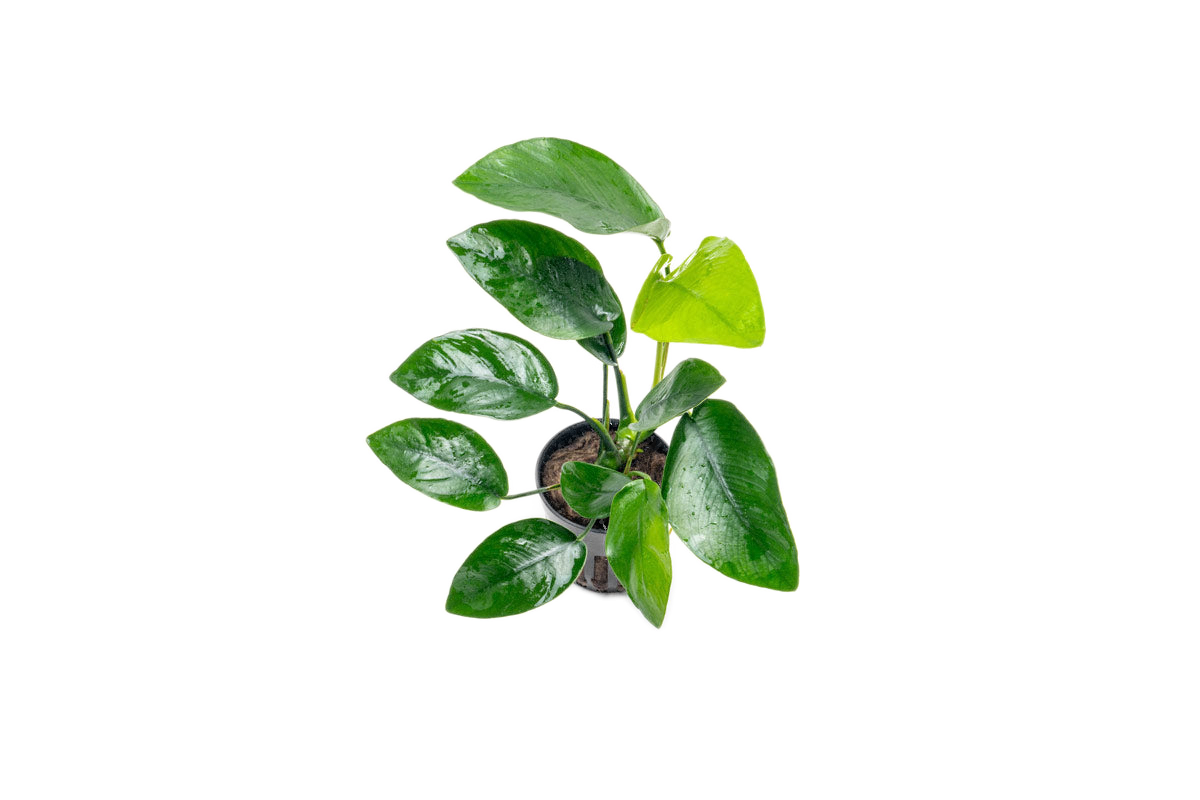
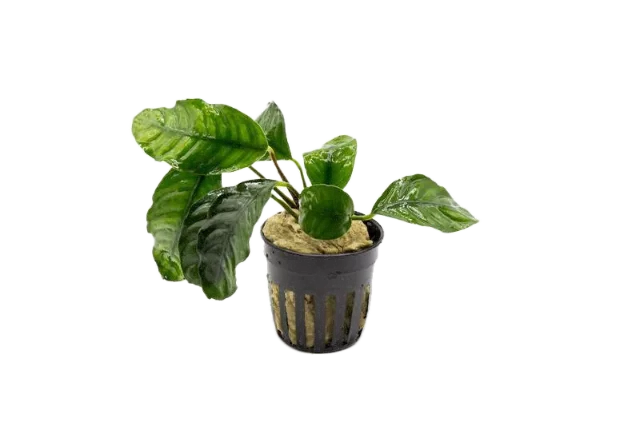
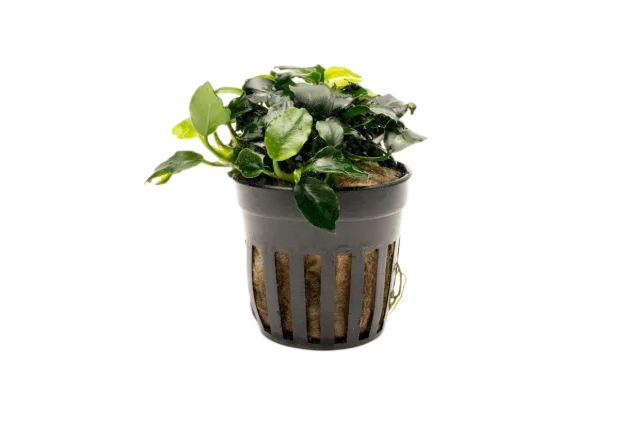
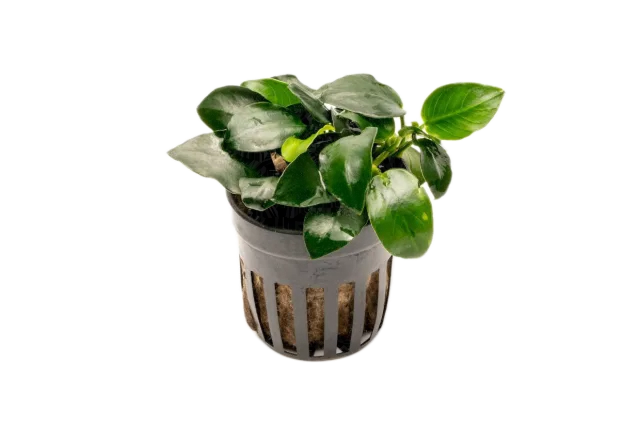
Anubias barteri var. nana 'Tropica' is a popular dwarf epiphyte from West Africa with glossy, dark green, elliptical leaves reaching 3 to 5 inches. Extremely easy and forgiving, it grows slowly under low light attached to hardscape with the rhizome above substrate, tolerates wide water parameters, and resists grazing by fish, snails and shrimp.
Quick facts
Identity
- Also known as
- Tropica Anubias nana
- Synonyms
- Anubias nana
- Environment
- Freshwater
- Native to
- Cameroon, West Africa
- Habitat
- Shaded margins and shallow zones of forest rivers and streams with moderate to strong current, growing attached to rocks and exposed tree roots at the water's edge.
- Sourcing
- Aquacultured
- Conservation
- Not Evaluated
Care
- Care level
- Easy
- Growth form
- Rhizome
- Max height
- 2 – 6 in (5.1 – 15 cm)
- Spread
- 8 in (20 cm)
- Growth rate
- Slow
- Placement
- Foreground, Midground, Epiphyte
Water
- Temperature
- 72 – 82 °F (22 – 28 °C)
- pH
- 6.0 – 7.5
- GH
- 2 – 15 dGH
- PAR
- 20 – 50 PAR
- Flow
- Low-Moderate
- Light
- Low
- CO₂
- Beneficial
Planting
- Substrate
- Not needed
- Feeds from
- Both
- Fertilizer needs
- Low
- Colors
- Green
Feeding & breeding
- Propagation
- Rhizome division
Something wrong or missing? Submit a correction
Care guide
Overview
Bred from West African stock through tissue culture, this cultivar carries glossy, elliptical dark green leaves 3 to 5 inches long. Slow growing under low light and tolerant of wide water parameters, it attaches to hardscape with the rhizome kept clear of substrate and holds up well against fish, snail and shrimp grazing.
Care
One of the toughest plants in the hobby, tolerating a wide range of temperature, pH, and hardness with almost no attention. It grows slowly under low to medium light and does not require CO2, though modest supplementation can speed leaf production. Its thick, leathery leaves are unappealing to most grazing fish and shrimp, which helps it survive in mixed community setups where softer plants get shredded.
Planting & trimming
Attach the rhizome to driftwood or rock using cotton thread, fishing line, or a small dab of cyanoacrylate gel glue, keeping the rhizome itself fully exposed to water flow rather than buried in substrate. Once secured, avoid moving the plant, since it can take weeks to settle and resume active growth after disturbance. It also adapts well to emersed culture in humid paludariums or as a floating plant in bare-bottom tanks.
Fertilizing
Nutrient uptake happens mainly through the leaves and roots from the water column rather than the substrate, so root tabs are unnecessary. Light dosing of a liquid fertilizer containing iron and potassium supports steady leaf growth. Yellowing leaves usually point to nitrogen deficiency or insufficient light, while small pinholes suggest a lack of potassium.
Propagation
Propagate by cutting the horizontal rhizome into sections, making sure each piece retains at least three to four leaves and healthy roots. The severed pieces can be reattached to new hardscape and will continue growing independently with no special aftercare beyond stable water conditions.
Problems
Its notoriously slow leaf turnover makes older foliage a common target for green spot algae and black beard algae, especially under strong light or low flow. Rhizome rot is the most serious problem, usually triggered by burying the rhizome in substrate or physical damage, and appears as blackened, mushy tissue that needs to be cut away back to healthy material. Trimming damaged or algae-covered leaves at the base with clean scissors keeps the plant tidy and reduces disease spread.
Sources
More Anubias
Something wrong or missing? Submit a correction
In the community
Popular tanks using Anubias Nana Tropica
No public tanks are showcasing Anubias Nana Tropica yet.