
Aquatic Plant
Anubias Heterophylla Supernova
Anubias heterophylla 'Supernova'AraceaeAnubias
Price: $26.99 USD
Add from My tanks →1 photos
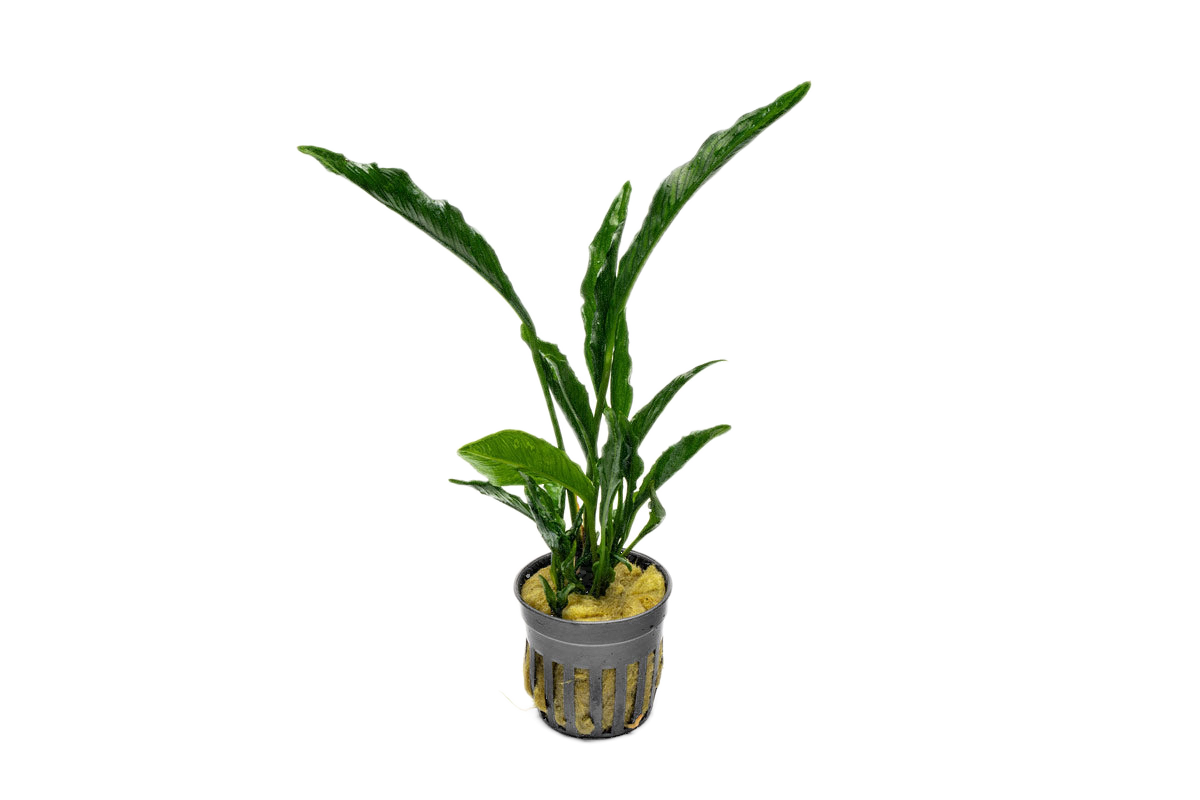
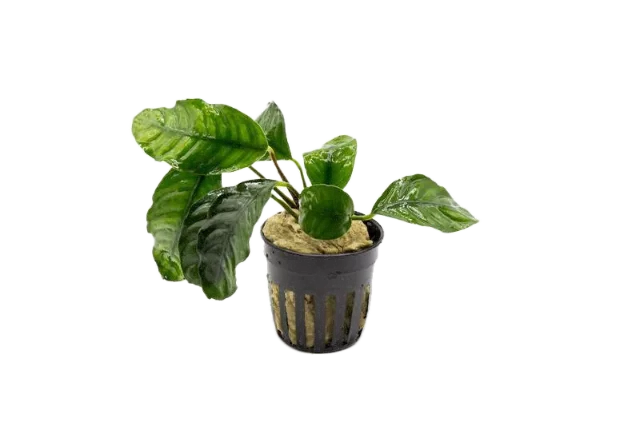
Anubias heterophylla 'Supernova', from West Africa, is one of the largest Anubias with extra-long, beautifully waved leaf blades and intricate venation, reaching 8 to 16 plus inches as a midground or background focal point. Easy and slow-growing, this resilient epiphyte thrives under low to medium light attached to hardscape, tolerates wide water parameters, and propagates by rhizome division.
Quick facts
Identity
- Also known as
- Congo Anubias Supernova; Supernova Anubias
- Synonyms
- Anubias heterophylla var. Supernova; Anubias Super Nova
- Environment
- Freshwater
- Native to
- Captive-bred variety
- Habitat
- Wild-type Anubias heterophylla grows along rivers and streams in West Africa (Cameroon); this cultivar was developed by the Aquatic Plant Centre nursery in Thailand and has no natural range.
- Sourcing
- Captive-bred
- Conservation
- Not Evaluated
Care
- Care level
- Easy
- Growth form
- Rhizome
- Max height
- 4 – 16 in (10 – 41 cm)
- Spread
- 6 in (15 cm)
- Growth rate
- Slow
- Placement
- Midground, Background, Epiphyte
Water
- Temperature
- 72 – 82 °F (22 – 28 °C)
- pH
- 6.0 – 7.5
- GH
- 3 – 15 dGH
- Flow
- Low-Moderate
- Light
- Low
- CO₂
- Not needed
Planting
- Substrate
- Not needed
- Feeds from
- Both
- Fertilizer needs
- Low
- Colors
- Green
Feeding & breeding
- Propagation
- Rhizome division
Something wrong or missing? Submit a correction
Care guide
Overview
Reaching 8 to 16 inches or more, this cultivar ranks among the largest Anubias forms, with elongated, wavy leaf blades and pronounced venation setting it apart from broad-leaved heterophylla types. It grows slowly and stays easy under low to medium light, attached to driftwood or rock rather than buried, and increases only through rhizome division.
Care
A large-form Anubias hybrid with elongated, wavy lance-shaped leaves and a glossy, deep green finish that gives it a more refined silhouette than broad-leaved heterophylla forms. It tolerates a wide range of water conditions and lighting, making it forgiving for beginners, though very bright light without adequate CO2 or nutrients can invite algae on its slow-growing leaves. As with all Anubias, the rhizome must stay above the substrate, attached to driftwood or rock rather than buried, or it will rot. Given its eventual size it works best as a background or large midground specimen in medium to large tanks.
Planting & trimming
Attach the rhizome to driftwood, rock, or other hardscape using thread, fishing line, or plant-safe glue, keeping the rhizome itself exposed to open water rather than pressed into substrate. It can also be grown emersed in paludariums or left partially submerged during acclimation. Trim only damaged or algae-covered leaves at the base as needed since the plant produces new growth slowly.
Fertilizing
Being a column and root feeder, it benefits from regular liquid fertilizer dosing including iron and micronutrients, since it is not planted in a nutrient substrate. Root tabs placed near the rhizome roots can supplement growth if the plant is mounted near a substrate bed. Yellowing or translucent new leaves usually point to iron or micronutrient deficiency rather than a lack of macros, given the plant's slow uptake and growth rate.
Propagation
Propagate by dividing the rhizome once a section has developed at least three to five leaves and its own root cluster, cutting with a clean blade. Each division should be reattached to hardscape rather than buried, and growth resumes slowly, often taking many months to produce a full-sized new plant.
Problems
Rhizome rot from burial is the most common problem, showing as a soft, mushy, discolored rhizome that should be trimmed back to healthy tissue. Because growth is slow, algae can accumulate on older leaves if lighting is too strong for the tank's CO2 and nutrient levels, so shaded placement or reduced photoperiod helps keep foliage clean. The thick, leathery leaves are naturally resistant to melting and are rarely bothered by grazing fish or shrimp.
Sources
More Anubias
Something wrong or missing? Submit a correction
In the community
Popular tanks using Anubias Heterophylla Supernova
No public tanks are showcasing Anubias Heterophylla Supernova yet.