
Aquatic Plant
Anubias Hastifolia
Anubias hastifoliaAraceaeAnubias
Price: $34.99 USD
Add from My tanks →1 photos
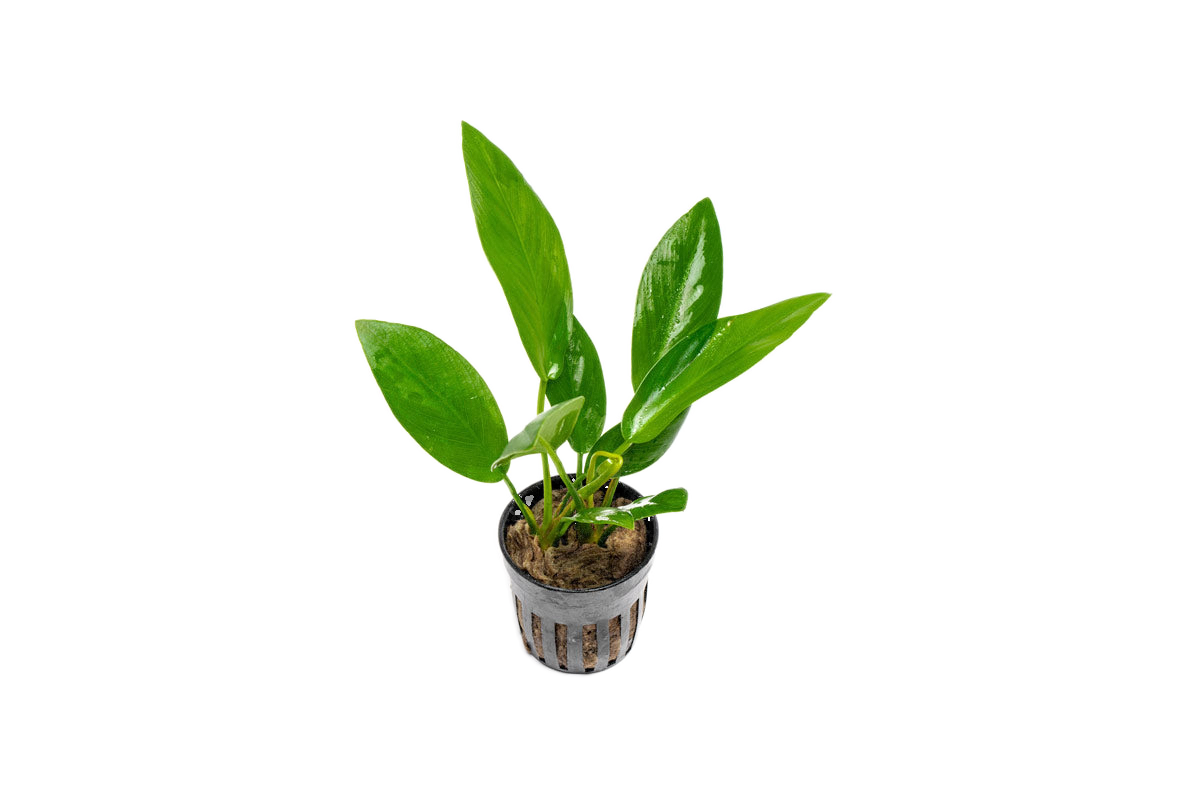
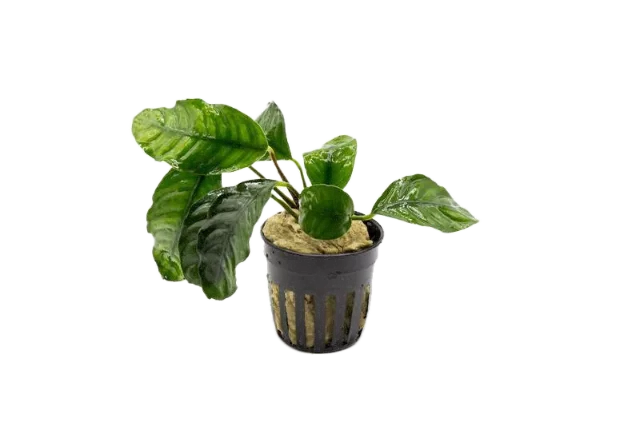
Anubias hastifolia is the go-to choice for bold, architectural foliage, with distinct triangular arrowhead-shaped leaves on tall petioles reaching 6 to 16 inches. This easy epiphyte brings pointed drama to midground and background zones in low-tech aquariums, terrariums, and paludariums, handling a wide range of water parameters.
Quick facts
Identity
- Also known as
- Spade-leaf Anubias; Arrowhead Anubias
- Synonyms
- Anubias hastifolia var. glabra
- Environment
- Freshwater
- Native to
- Cameroon, Gabon, Central Africa
- Habitat
- Rivers, streams, and marshes in tropical West and Central Africa, typically growing along banks with roots anchored to rock or wood in slow to moderate current
- Sourcing
- Captive-bred
- Conservation
- Not Evaluated
Care
- Care level
- Easy
- Growth form
- Rhizome
- Max height
- 4 – 18 in (10 – 46 cm)
- Spread
- 12 in (30 cm)
- Growth rate
- Slow
- Placement
- Midground, Background, Epiphyte
Water
- Temperature
- 72 – 82 °F (22 – 28 °C)
- pH
- 6.0 – 8.0
- GH
- 2 – 20 dGH
- dKH
- 4 – 18 dKH
- Flow
- Low-Moderate
- Light
- Low
- CO₂
- Beneficial
Planting
- Substrate
- Not needed
- Feeds from
- Both
- Fertilizer needs
- Low
- Colors
- Green
Feeding & breeding
- Propagation
- Rhizome division, Cuttings
Something wrong or missing? Submit a correction
Care guide
Overview
Anchors itself to driftwood or rock via rhizome roots and pushes up tall, spear-shaped leaves on long petioles rather than spreading through substrate. Growth is slow but reliable across a broad pH and hardness range, suiting low-tech midground or background placement where its height and arrowhead foliage stand apart from smaller Anubias types. Keep the rhizome unburied and exposed to modest light.
Care
One of the larger Anubias species, growing tall spear- or arrowhead-shaped leaves on long petioles that give it a more dramatic silhouette than nana or barteri types. It tolerates low light, a wide pH and hardness range, and fluctuating water quality, making it forgiving for beginners once positioned correctly. Growth is slow, so it fits best in tanks with room for a mature specimen and does not need to be crowded by faster stem plants.
Planting & trimming
Tie or wedge the rhizome to driftwood or rock using thread, fishing line, or a rubber band until the roots grip the surface on their own, then remove the tie. Never bury the rhizome in substrate, as this leads to rot; only the roots should be in contact with substrate if planted at all. Trim off old or algae-covered leaves at the base to keep the plant tidy and to redirect energy toward new growth.
Fertilizing
Most nutrition is absorbed through the leaves and water column rather than the roots, so regular dosing of a liquid fertilizer containing iron and trace elements supports steady growth. Root tabs are optional since the rhizome is usually left unburied, but nutrient-rich substrate nearby can still leach some benefit to any roots that reach it. Pale new leaves or stunted growth point to a lack of micronutrients and usually respond to more consistent liquid fertilization.
Propagation
Propagate by dividing the rhizome into sections, each with at least one leaf and a healthy root, using a clean blade. Divided sections can be reattached to new hardscape and will slowly establish new growth points. Growing emersed in a paludarium or terrarium speeds up rhizome production compared to fully submersed conditions.
Problems
Slow growth combined with strong lighting invites algae film on the tough leaves, so shading or trimming photoperiod to 6-8 hours daily helps keep leaves clean. Rhizome rot can develop if the rhizome is buried or if organic waste accumulates around it, showing up as a soft, blackened, foul-smelling rhizome; improving flow and trimming affected tissue with clean tools usually stops it from spreading. The leaves themselves are tough and rarely melt, though new emersed-grown leaves can sometimes struggle after conversion to submersed growth.
Sources
More Anubias
Something wrong or missing? Submit a correction
In the community
Popular tanks using Anubias Hastifolia
No public tanks are showcasing Anubias Hastifolia yet.