
Aquatic Plant
Anubias Congensis
Anubias barteri var. congensisAraceaeAnubias
Price: $34.99 USD
Add from My tanks →1 photos
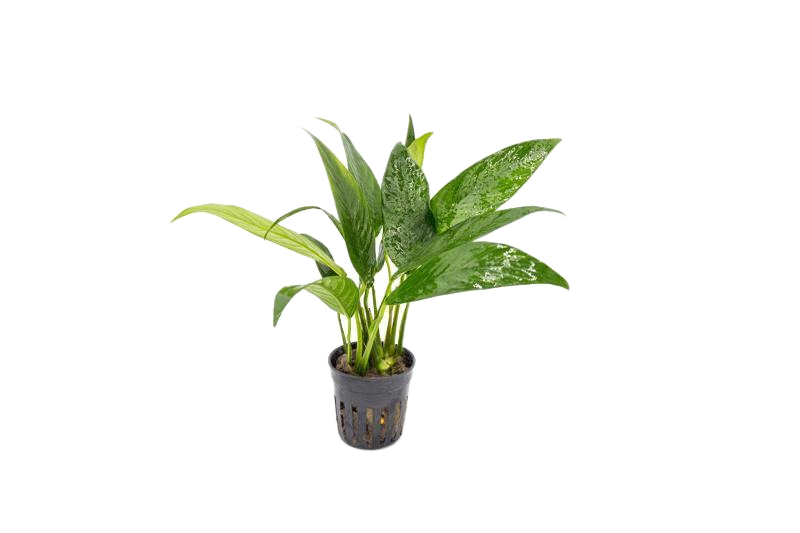
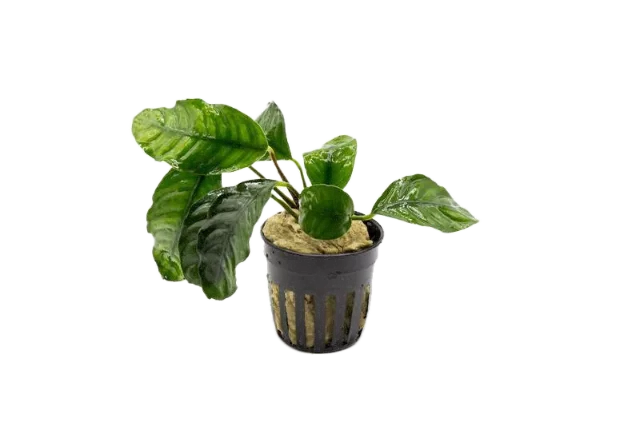
Anubias barteri var. congensis, also called Anubias Afzelii, is a West African aquatic epiphyte with sleek, slender, lanceolate leaves and pointed tips, reaching 6-8 inches. It is an exceptional midground anchor or background accent for medium and large aquariums, thriving in low light with no CO2 required; attach to hardscape with the rhizome above substrate.
Quick facts
Identity
- Also known as
- Anubias Afzelii; Congo Anubias
- Synonyms
- Anubias barteri var. barteri; Anubias lanceolata
- Environment
- Freshwater
- Native to
- Cameroon, West and Central Africa
- Habitat
- Grows along shaded riverbanks and streams, often partially emersed on rocks and roots in tropical rainforest waterways
- Sourcing
- Aquacultured
- Conservation
- Not Evaluated
Care
- Care level
- Easy
- Growth form
- Rhizome
- Max height
- 5 – 10 in (13 – 25 cm)
- Spread
- 10 in (25 cm)
- Growth rate
- Slow
- Placement
- Midground, Background
Water
- Temperature
- 72 – 82 °F (22 – 28 °C)
- pH
- 6.0 – 7.5
- GH
- 3 – 15 dGH
- PAR
- 20 – 50 PAR
- Flow
- Low-Moderate
- Light
- Low
- CO₂
- Not needed
Planting
- Substrate
- Not needed
- Feeds from
- Both
- Fertilizer needs
- Low
- Colors
- Green
Feeding & breeding
- Propagation
- Rhizome division
Something wrong or missing? Submit a correction
Care guide
Overview
West and Central African streams and shaded riverbanks are the source of this slender, lance-leaved Anubias, which reaches 6-8 inches with pointed foliage. It anchors midground or background zones in medium to large tanks, needs no CO2, and must be tied to hardscape rather than buried.
Care
This large-leaved cultivar of Anubias barteri tolerates a wide range of water conditions and low light, making it a dependable choice for beginners and low-tech tanks. It should be fastened to driftwood or rock rather than planted in substrate, since a buried rhizome tends to rot. Growth is slow, so leaves accumulate little damage but also collect algae and debris over time, which benefits from occasional wiping during water changes.
Planting & trimming
Attach the rhizome to driftwood, rock, or other hardscape using cotton thread or fishing line, keeping the rhizome itself above the substrate at all times since burial leads to rot. Plant-safe glue can be used sparingly on roots but should be kept off the rhizome tissue, as some glues can burn and damage it. Trim only older, yellowing, or algae-covered leaves near the base; the plant needs little regular pruning given its slow growth.
Fertilizing
Root tabs offer little benefit since this plant draws nutrients mainly through its leaves and rhizome rather than a substrate root system. A diluted liquid fertilizer containing iron and micronutrients, dosed occasionally, helps maintain deep leaf color and steady growth. Pale or yellowing new leaves can indicate a lack of iron or overall nutrient deficiency in a lean, low-tech setup.
Propagation
New plants are produced by dividing the rhizome with a clean, sharp blade once a section has developed several leaves and some roots. Each division should retain at least two to three leaves to establish well after being reattached to hardscape. Growth is slow, so propagation is infrequent compared to faster-growing stem plants.
Problems
Rhizome rot from burial in substrate or from glue applied directly onto the tissue is the most common cause of loss. Excess light relative to this plant's slow growth rate often results in algae film building up on the tough leaves, particularly diatoms or green spot algae. Otherwise the species is quite resistant to disease and rarely suffers pest issues beyond occasional algae fouling.
Sources
More Anubias
Something wrong or missing? Submit a correction
In the community
Popular tanks using Anubias Congensis
No public tanks are showcasing Anubias Congensis yet.